
Princeton Wellness Centre Local SEO and Service Landing Page Case Study
How bilingual service pages, local SEO, service landing page SEO, blog content, and paid traffic readiness can help Princeton Wellness Centre compete across Richmond Hill, Markham, Aurora, Vaughan, and nearby patient markets.
Client: Princeton Wellness Centre
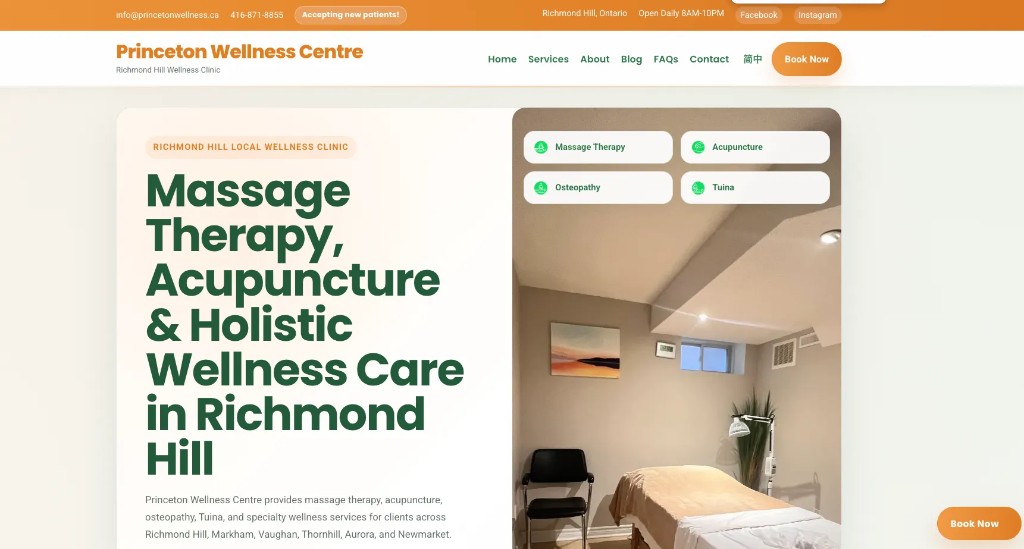
Princeton Wellness Centre is a strong example of how local SEO becomes much more powerful when service intent, city intent, bilingual content, and conversion paths are treated as one connected system.
For very local healthcare and wellness businesses, visibility is not only about whether the homepage ranks. Patients often search for a specific treatment, a specific symptom, a provider in a specific city, or a practical question before booking. If the website only speaks in broad terms, it becomes much harder to capture those high-intent searches.
This case study focuses on how Princeton Wellness Centre can use local SEO, service landing page SEO, bilingual pages, blog content, and paid traffic readiness to support stronger clinic visibility across Richmond Hill, Markham, Aurora, Vaughan, Thornhill, and nearby patient markets.
The local SEO opportunity
For a wellness clinic, search behavior usually combines both service and location. A patient might not know the clinic name yet, but they know the problem they are trying to solve and the area they are willing to visit.
People do not only search for a clinic name. They search for things like:
- acupuncture in Richmond Hill
- massage therapy near Richmond Hill
- osteopathy in Markham
- TCM consultation in Aurora
- Tuina or acupuncture near Vaughan
- wellness clinic near Thornhill
- neck and shoulder pain massage therapy Richmond Hill
That means the website needs to support more than one type of query. It needs enough clarity to rank for service-specific terms while also building geographic relevance around the nearby cities and patient communities the clinic serves.
Why service pages matter so much
One of the strongest assets for local SEO is a useful service landing page built around a real treatment or patient need.
A clinic page should not only list a service name. It should explain the service, who it may fit, what a patient can expect, how booking works, and why the clinic is relevant for the local area. That gives Google and the user something specific to understand:
- what the service or condition is
- how the clinic supports that need
- why the page is relevant for a local searcher
- what the next booking action should be
This is where SEO becomes more practical than generic blogging. Instead of publishing broad wellness content, the site can create pages tied to clear patient intent.
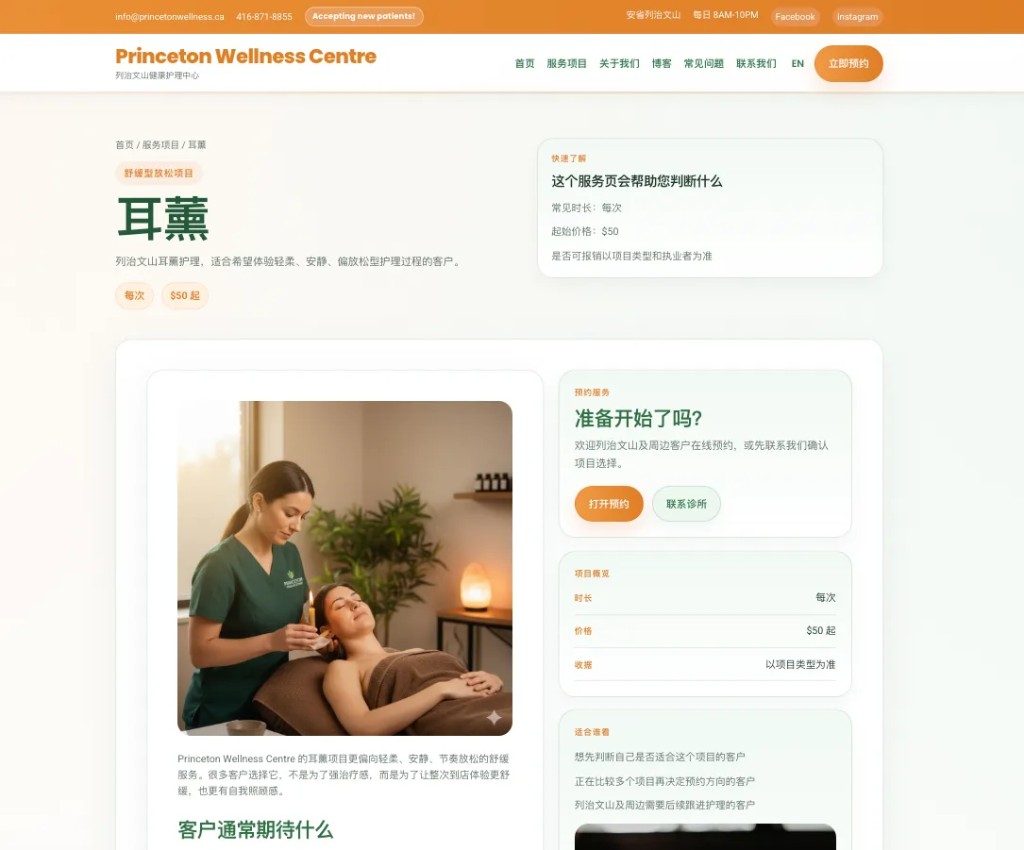
Bilingual pages are not just translation
Princeton Wellness Centre also shows why bilingual local SEO should not be treated as a simple language switch. English and Chinese patients may search differently, compare clinics differently, and need different levels of explanation before booking.
The Chinese version needs to feel natural, direct, and useful for the patient. It should explain services like massage therapy, acupuncture, osteopathy, Tuina, and specialty wellness care in language that local Chinese-speaking users actually search and understand.
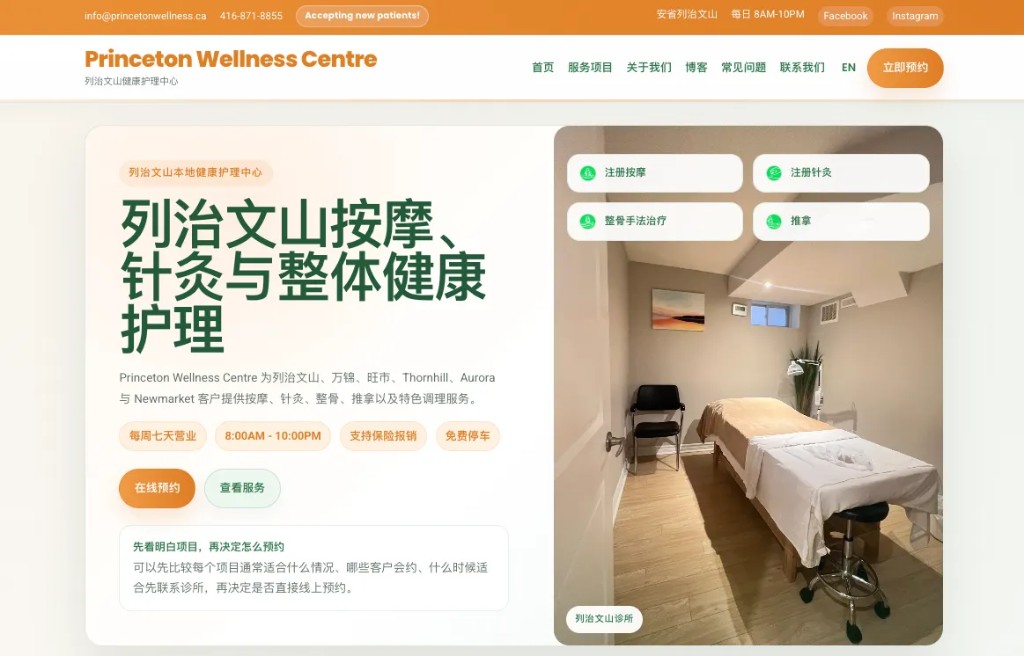
Geographic reach across multiple nearby cities
The site has value not only in Richmond Hill, but also in nearby service markets like:
- Markham
- Aurora
- Vaughan
- Thornhill
- Newmarket
That kind of visibility is important because patients often search within city or neighborhood language even when they are willing to travel a short distance.
When pages are structured well, it becomes possible to support rankings across several nearby local markets without relying on weak duplicate content.
Blog content supports service-page authority
For a local clinic, blog content should not be random. It should support the service pages and answer practical patient questions. Princeton Wellness Centre’s content direction can cover topics like desk-job neck pain, long-term foot pain, dampness and low energy in Chinese medicine, recovery after busy weeks, or what to expect before a first appointment.
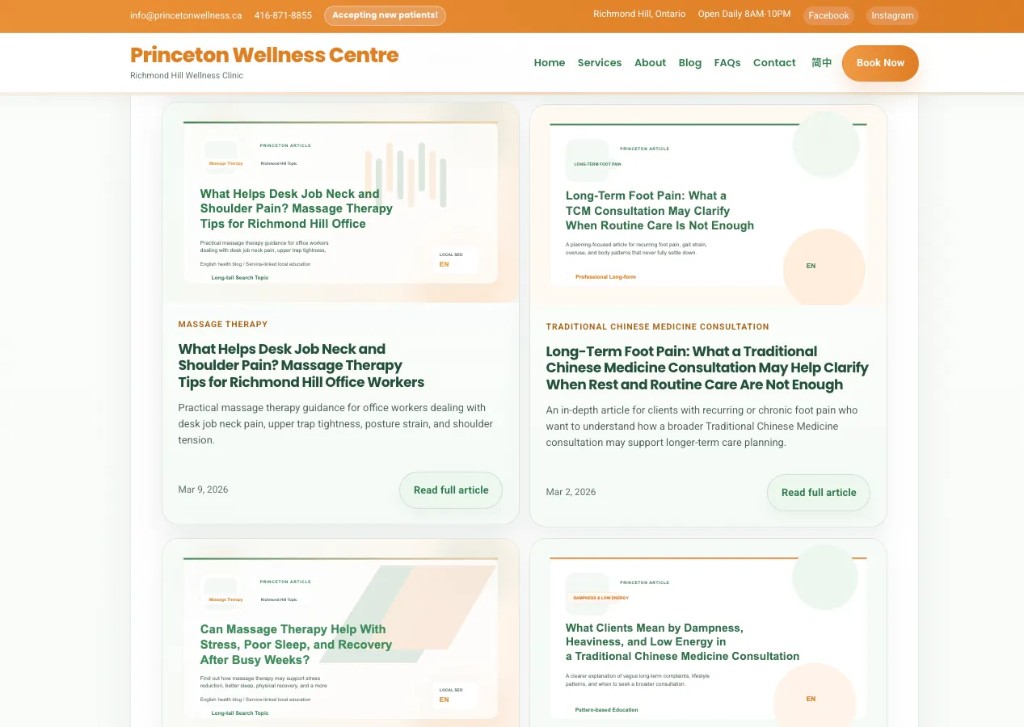
These posts help the website build topical authority around real patient concerns. More importantly, they create internal links back to service pages, appointment paths, and relevant local pages.
The SEO structure behind stronger rankings
For this type of clinic site, the most important SEO factors usually include:
- clear service-specific pages
- local relevance in page structure
- well-organized internal linking
- location alignment between site content and business presence
- content that matches real patient searches
- bilingual English and Chinese service content
- blog posts that support service-page authority
- fast booking paths and mobile-friendly calls to action
This is also where GEO-style thinking matters. Search engines need clear geographic signals, but users also need confidence that the clinic is relevant to their area and their specific concern.
Why paid traffic can multiply the result
Local SEO and service landing page SEO are valuable on their own, but they become even stronger when paid traffic is added carefully. For a clinic, Google Ads or local campaign traffic should not go to a generic homepage if the user searched for a specific need.
When a massage therapy ad, acupuncture ad, or Chinese-language clinic ad lands on a matching page, the conversion path is much stronger. The page already explains the service, location relevance, expectations, and booking action. That can make the same advertising budget work much harder.
This is why local clinics often see outsized gains when three things are aligned:
- local SEO structure
- service landing pages
- paid traffic to the right page
The landing page does not only help organic search. It also improves the quality of paid traffic, appointment intent, and lead tracking.
Broader business value
Local SEO for healthcare businesses is not only about traffic. It is about matching the clinic to the kinds of searches that can lead to actual appointments.
When pages rank well across Richmond Hill, Markham, Aurora, Vaughan, Thornhill, and nearby communities, the website becomes a more reliable source of visibility for the clinic’s real service area.
That makes the website more valuable over time, especially compared with relying only on paid traffic or a homepage-heavy structure. It also gives the business a better foundation for future campaigns, seasonal promotions, and patient education content.
Final thought
Princeton Wellness Centre shows why local SEO works best when service pages, local intent, bilingual content, blog structure, and geographic coverage are built together.
For clinics, that means thinking beyond one homepage and creating a site structure that can rank for what people are actually looking for in the places they are looking from. When that foundation is paired with focused Google Ads or other paid traffic, the impact can become much larger than a standard clinic website redesign.