
SAVAGE Toronto Case Study: A Private Luxury Showroom Website with Custom Booking, Gothic Motion Design and SEO/GEO
How PLANSALE rebuilt the Sevage Kick site (now SAVAGE) as an appointment-first Chrome Hearts showroom in Toronto, with a custom booking system, gothic motion design and SEO/GEO that earned top-five Canadian rankings and out-of-town buyers without ads.
Client: SAVAGE (Sevage Kick), Toronto
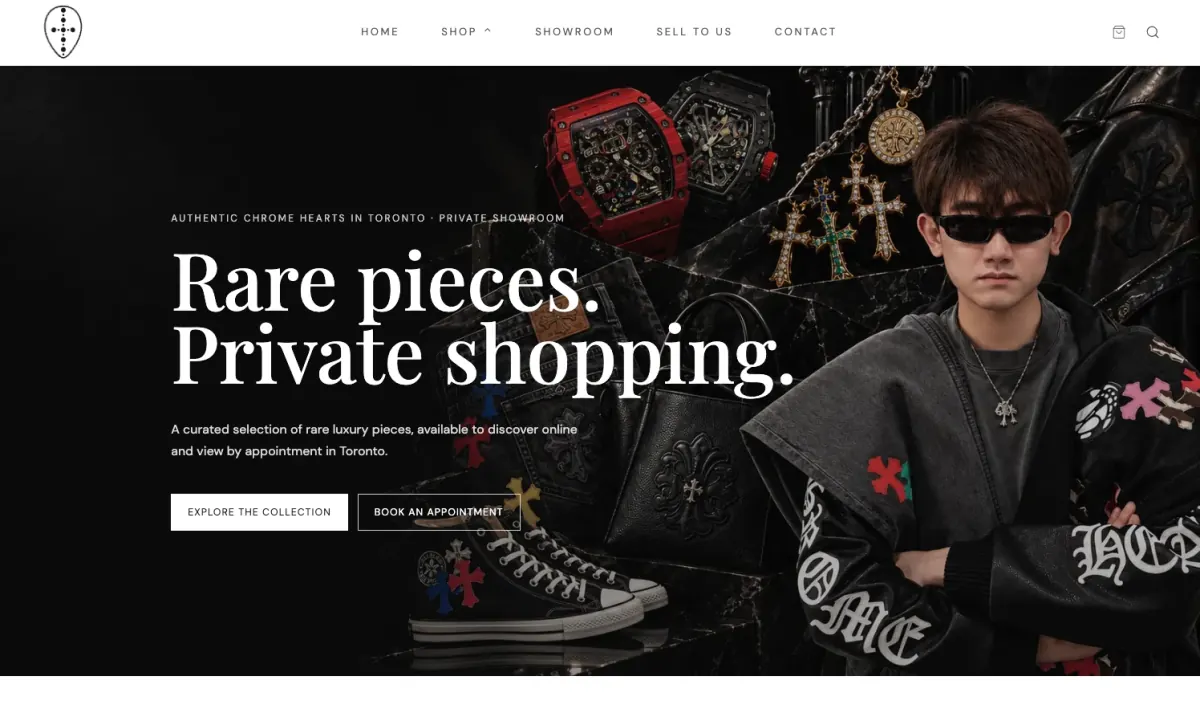
Sevage Kick began as a streetwear and hype-product store. Today the same business runs as SAVAGE, a private luxury showroom in North York that specializes in authentic Chrome Hearts and sells rare pieces by appointment. The website had to change with it. A Shopify-style catalogue with a cart on every page is the wrong front door for pieces that can cost tens of thousands of dollars and attract the wrong kind of attention.
This case study explains what PLANSALE rebuilt and why: an appointment-first buying flow, a booking system built for the showroom instead of a retail plugin, a gothic visual language that matches the brand, and a SEO/GEO structure that lets search engines and AI assistants describe the business accurately.
Where the Site Started
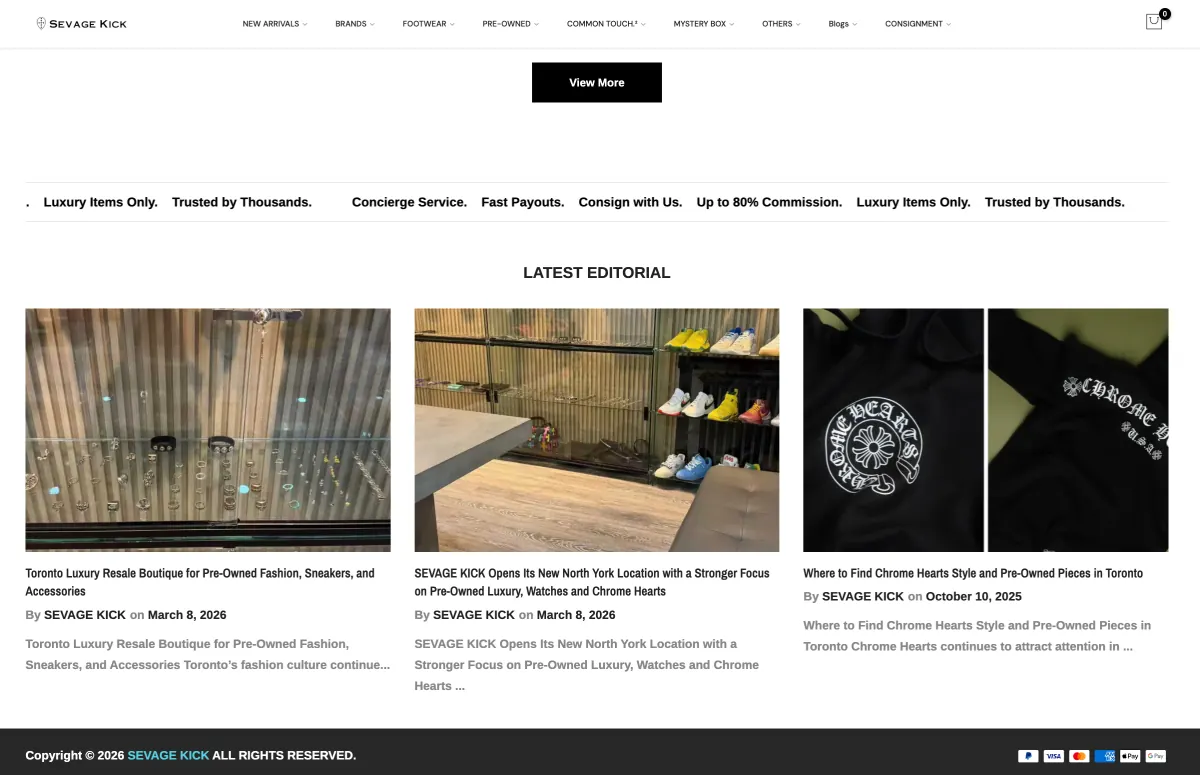
The earlier version of the site followed a standard fashion e-commerce pattern. The navigation carried nine top-level menus, including new arrivals, brands, footwear, pre-owned, mystery box, blogs and consignment. A cart icon sat in the header and payment-method logos sat in the footer.
That structure suits fast-moving streetwear. It works against a luxury showroom for three reasons:
- Security. Rare Chrome Hearts jewelry, leather and watches are high-value goods. Public addresses, open walk-in hours and instant online checkout all invite the wrong visitors.
- Trust. Serious buyers want to know the pieces are authentic and that a real person will meet them, not that a cart will process a card.
- Focus. Nine menus dilute the story. A private showroom needs one clear path: discover, request a visit, come in.
Appointment-First Instead of Cart-First
The rebuilt site keeps browsing open and moves the purchase into the showroom. Shop pages show the pieces and prices in CAD, but there is no public checkout. Purchases are arranged through WhatsApp or a private viewing. The two primary buttons in the hero are “Explore the collection” and “Book an appointment”, and the exact address is only sent in the booking confirmation email.
This is a deliberate trade. The website’s job is no longer to close a sale at 2 a.m. Its job is to qualify a serious visitor, protect the location and the inventory, and convert interest into a scheduled visit.
A Custom Booking System, Not a POS Plugin
Off-the-shelf booking plugins and point-of-sale integrations are built for salons, restaurants and ordinary retail counters. Dropped into a luxury showroom they look and behave wrong: generic form fields, a loud checkout style, and no sense of privacy.
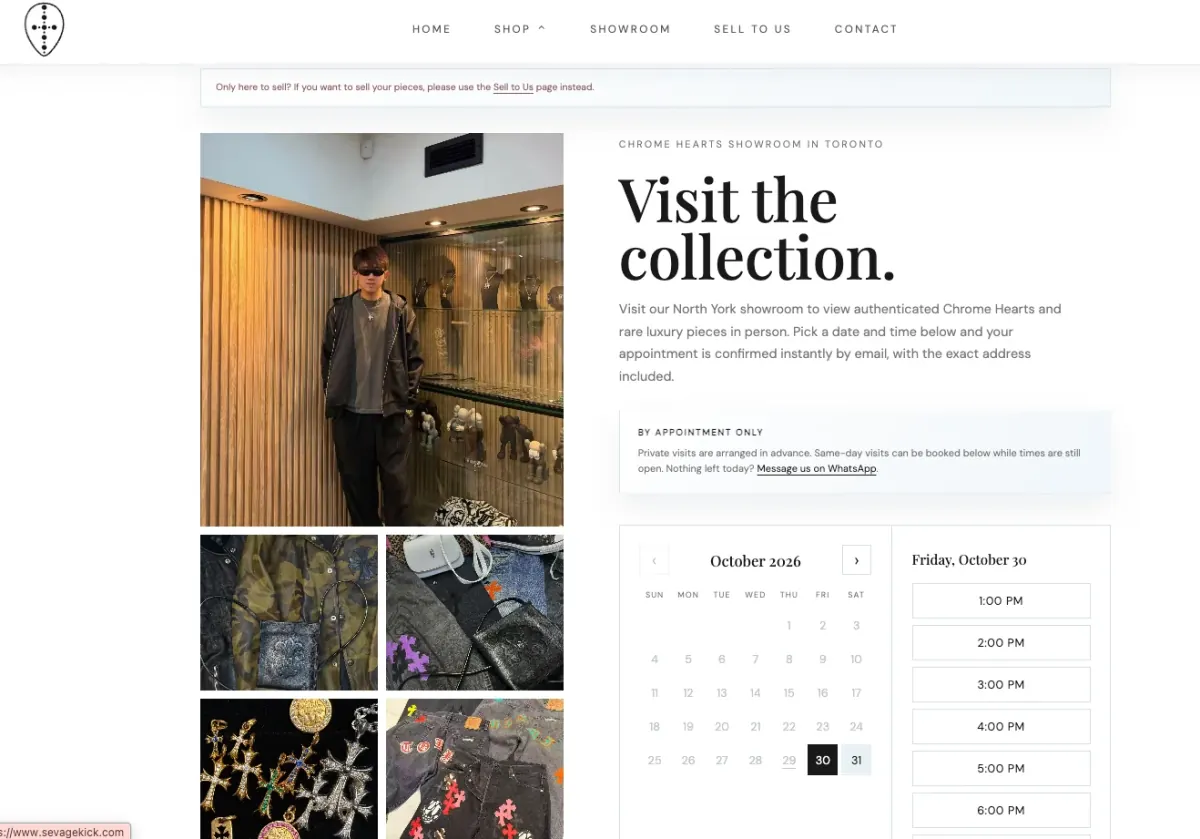
PLANSALE built a separate booking system for SAVAGE instead. The visitor flow is short:
- Open the showroom page and read what to expect.
- Pick a date on the calendar. Dates that have passed are greyed out.
- Pick a time slot for that day.
- Receive an instant email confirmation that includes the exact address.
Same-day visits stay possible while slots are open, and a WhatsApp link covers last-minute requests when the day is full. Visits run seven days a week from 1 PM to 8 PM. The page also tells existing owners who want to sell to use the Sell to Us page instead, so the booking calendar stays reserved for buyers.
The design principle was to remove everything that feels like a transaction. There is no cart, no card form and no account to create. The visitor chooses a time and the showroom confirms it.
A Gothic Visual Language That Matches Chrome Hearts
Chrome Hearts is built on gothic lettering, sterling silver and dark leather. The website’s motion design follows that language rather than a generic luxury template. Three details do most of the work.
Logo first, then the site
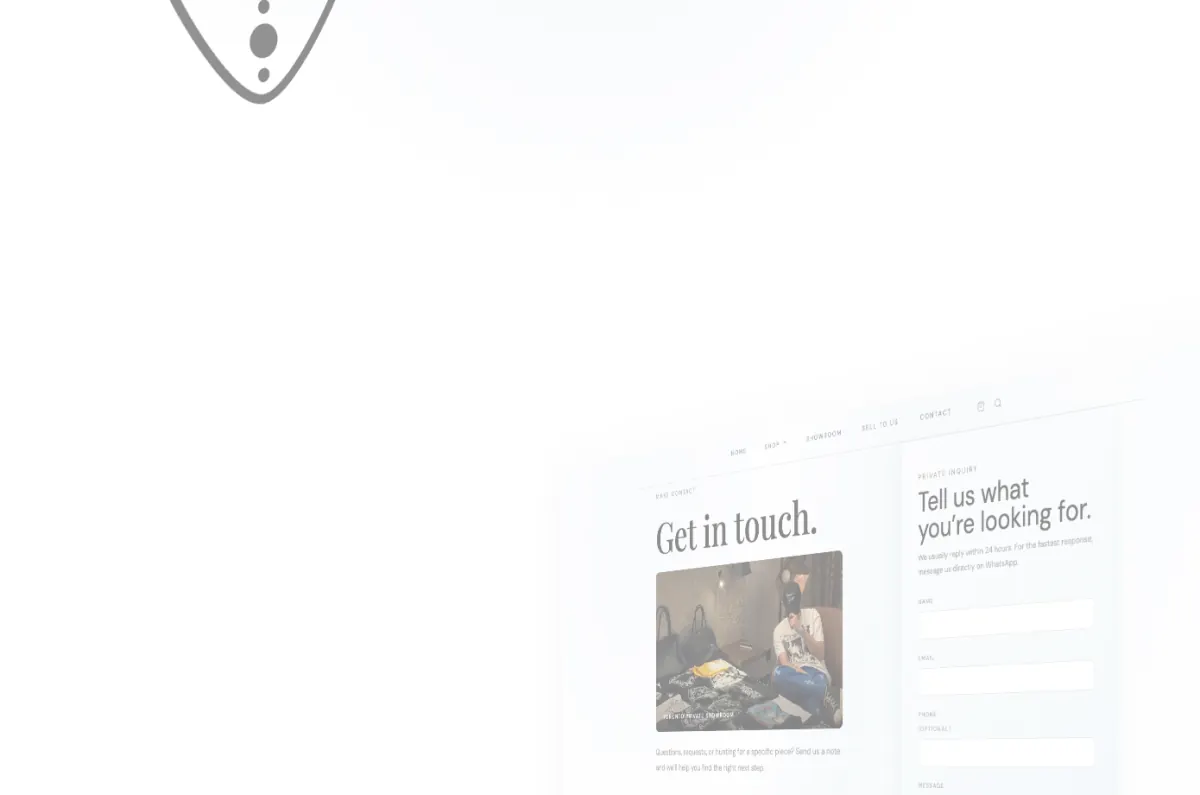
The visit begins with the SAVAGE mark alone on a soft blue-white field: the teardrop outline and the cross built from black dots, with a quiet “scroll to explore” cue. Nothing else competes with it. The brand is established before the first product appears.
A page-turn into the contact page
The contact page opens like a book. As the visitor moves forward, the logo screen turns away and the Contact page swings in at an angle, with the “Get in touch” headline, the showroom photo and the private inquiry form still settling into place. It turns contact from a form into a small moment, and it keeps the same logo-first rhythm as the intro.
A footer made of dots
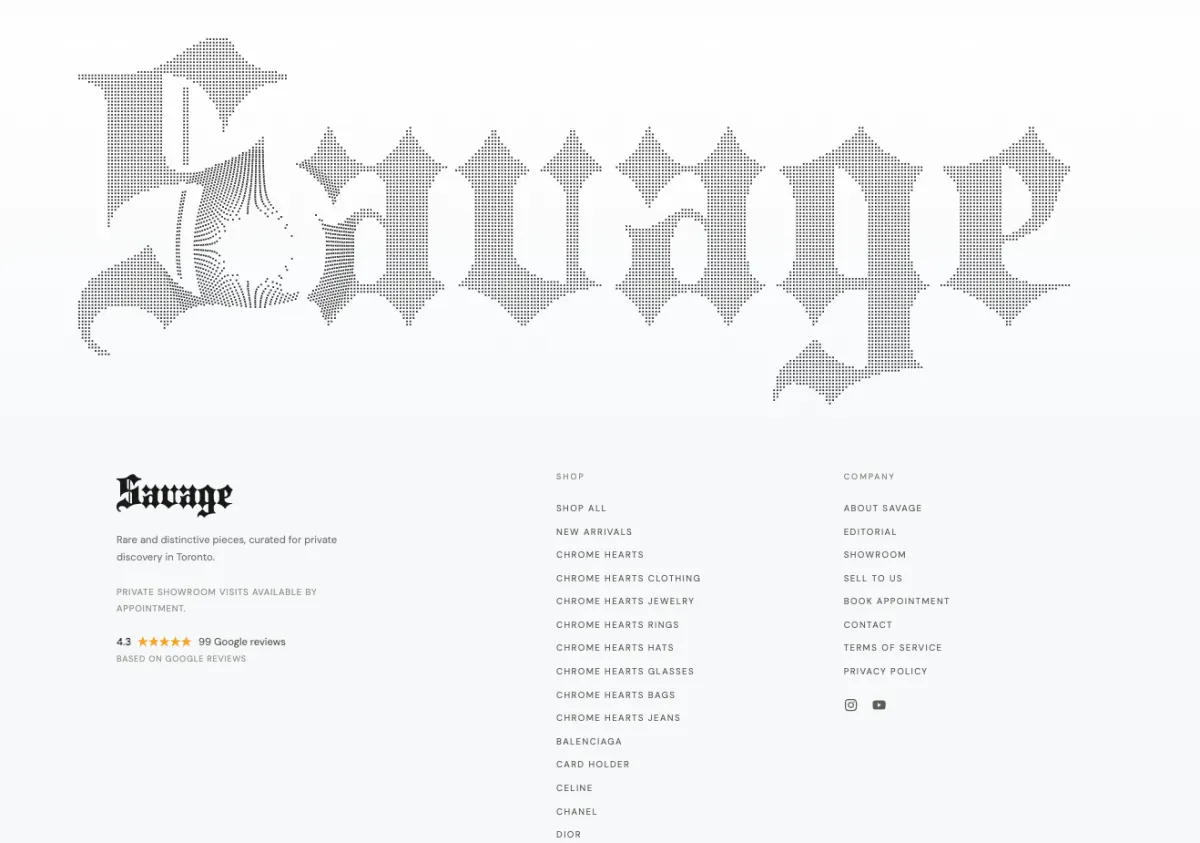
At the bottom of the site, the “Savage” wordmark is drawn entirely from small dots in a blackletter style. When a visitor clicks it, a circular ripple spreads outward from the click point and displaces the dots as it travels. The footer stops being a list of links and becomes the last memorable surface on the page. The standard navigation, brand description, Google review summary, legal links and social icons sit below the artwork as ordinary text.
SEO and GEO Built into the Catalogue
A private showroom still depends on search. People look for authentic Chrome Hearts in Toronto, for specific categories such as rings or hats, and for places to sell pieces. AI assistants now answer those questions directly. PLANSALE structured the site for both.
What is in place on the live site:
- Category depth. Separate collection pages for Chrome Hearts clothing, jewelry, rings, hats, glasses, bags and jeans, plus brand pages for Balenciaga, Celine, Chanel, Dior, ERD, Goyard, Louis Vuitton, Matty Boy, Supreme and Vans. Each page targets a distinct buying query instead of competing inside one catch-all shop page.
- Structured data on the pages that matter. The homepage carries ClothingStore and WebSite markup. Product pages carry Product and BreadcrumbList markup. The showroom page carries the business address, coordinates and opening hours as ClothingStore data, so the information AI systems quote is the information the business published.
- Plain-language answers. A Questions section on the homepage answers the things buyers and AI tools ask most: whether pieces are authentic, where the showroom is and when it is open, whether you can buy online, which currency prices are in, and how selling works.
- Dedicated pages for each intent. Showroom, Book Appointment, Sell to Us and Editorial each own one job, so a search for selling a Chrome Hearts piece lands on a page built for it.
- Local title and description. The homepage title and meta description lead with authentic Chrome Hearts and Supreme in Toronto, the private showroom and sellers across Canada.
- Sell-side flow. The three-step Sell to Us process (send details, team review, offer or evaluation) lets sellers across Canada start remotely, which feeds inventory without exposing the showroom.
The goal is not a single keyword ranking. It is that when a buyer, a seller or an AI assistant asks about Chrome Hearts in Toronto, every fact it finds about SAVAGE is consistent: what is sold, where, when, how to visit and how to sell.
Results in 2026: Organic Search Alone, No Ads Yet
The visible changes are structural. The site moved from a nine-menu catalogue with a cart to a focused five-item navigation (Home, Shop, Showroom, Sell to Us, Contact), a custom appointment flow, and a brand experience that looks like the product. The footer shows a 4.3 rating from 99 Google reviews as of this write-up, which gives first-time visitors a trust signal before they book.
The SEO and GEO work carried out through 2026 is now showing in search and in the showroom. According to SAVAGE’s own search checks:
- Page-one visibility on Google. The site appears on the first page of Google for its core Chrome Hearts and luxury resale searches.
- Top-five positions in Canada. Many individual product pages and category keywords now rank in the top five in Canadian Google results, not only the homepage. This is the payoff of giving every product and category its own well-structured page.
- Buyers travelling to Toronto. Customers have flown in from other Canadian cities, including Vancouver, Calgary and Montreal, and from several US cities, specifically to view Chrome Hearts pieces in the North York showroom. For an appointment-only business, a booked visit from another city is the strongest possible conversion.
- Pop-ups in new cities. Because demand is now visibly coming from outside Toronto, SAVAGE is preparing pop-up events in some of those cities.
- No paid traffic yet. All of this has come before any Google Ads spend or paid placement in ChatGPT and other AI assistants. Paid channels remain an untouched lever for the next stage.
The lesson is less about any single tactic and more about the basics done thoroughly: product and page optimization, consistent structured data, and a site that is easy to use. A buyer who finds a product page, understands it immediately, trusts it, and can book a visit in a few taps is a buyer who gets on a plane. User-friendly design is not decoration here; it is what turns rankings into visits.
We still do not publish revenue figures. Showroom bookings, inquiries through the contact form and WhatsApp, Sell to Us submissions and out-of-town visits are the numbers that matter for this business, and they depend on inventory, pricing and follow-up as much as on the website.
What Other Luxury and Appointment-Only Businesses Can Take from This
The pattern applies beyond Chrome Hearts: watch dealers, jewelers, fine art, vintage and designer resale, and any retailer whose stock is valuable enough that open access is a risk.
- Decide what the website should not do. Removing checkout and public addresses was a design decision.
- Build the booking flow around the buyer, not around a plugin’s defaults.
- Let the brand’s own aesthetic drive the motion design, and keep key information as real text so search engines can read it.
- Give every intent (buy, visit, sell, ask) its own page and its own structured data.
FAQ
What did PLANSALE do for SAVAGE (Sevage Kick)?
PLANSALE redesigned the website around an appointment-only luxury showroom model. The work covered a custom booking system, a gothic logo-first and dot-matrix visual design, category and brand collection pages, structured data, a Questions section and a sell-to-us flow.
Why not use a standard booking or POS plugin?
Standard plugins are designed for ordinary retail counters and service businesses. For a luxury showroom they feel generic, expose checkout-style steps and offer little control over privacy. A custom booking flow let the site confirm visits by email with the address, handle same-day requests and keep the experience in the brand’s tone.
Can customers buy online?
No. Customers browse pieces and prices online, then arrange a purchase through WhatsApp or a private showroom viewing. This protects the inventory and the location and suits the value of the pieces.
How does the site support SEO and AI search?
Each category and brand has its own collection page, key pages carry structured data (ClothingStore, WebSite, Product and BreadcrumbList), and plain-language answers cover authenticity, location, hours, currency and selling. That gives search engines and AI assistants consistent, extractable facts.
What results has the site produced?
Through 2026, SAVAGE reports page-one Google visibility and top-five Canadian rankings for many product and category keywords. Buyers have flown in from Vancouver, Calgary, Montreal and US cities to visit the showroom, and SAVAGE is planning pop-ups in some of those cities, all before running Google Ads or paid AI placements.
Can PLANSALE build something similar for another business?
Yes. PLANSALE builds appointment-first websites, custom booking flows and SEO/GEO structure for luxury retail, specialty dealers and local businesses. Start with PLANSALE projects or review custom web application development.
Conclusion
SAVAGE shows what changes when a website is designed around how a business actually sells. For a private luxury showroom, that meant an appointment instead of a cart, a booking system built for the room, motion design that carries the brand’s gothic identity, and SEO/GEO structure that keeps every public fact accurate.
If your business sells high-value or appointment-only products and your current website feels like the wrong front door, explore PLANSALE services or see more projects.
What did PLANSALE do for SAVAGE (Sevage Kick)?
PLANSALE redesigned the website around an appointment-only luxury showroom model. The work covered a custom booking system, a gothic logo-first and dot-matrix visual design, category and brand collection pages, structured data, a Questions section and a sell-to-us flow.
Why not use a standard booking or POS plugin?
Standard plugins are designed for ordinary retail counters and service businesses. For a luxury showroom they feel generic, expose checkout-style steps and offer little control over privacy. A custom booking flow let the site confirm visits by email with the address, handle same-day requests and keep the experience in the brand's tone.
Can customers buy online?
No. Customers browse pieces and prices online, then arrange a purchase through WhatsApp or a private showroom viewing. This protects the inventory and the location and suits the value of the pieces.
How does the site support SEO and AI search?
Each category and brand has its own collection page, key pages carry structured data (ClothingStore, WebSite, Product and BreadcrumbList), and plain-language answers cover authenticity, location, hours, currency and selling. That gives search engines and AI assistants consistent, extractable facts.
What results has the site produced?
Through 2026, SAVAGE reports page-one Google visibility and top-five Canadian rankings for many product and category keywords. Buyers have flown in from Vancouver, Calgary, Montreal and US cities to visit the showroom, and SAVAGE is planning pop-ups in some of those cities, all before running Google Ads or paid AI placements.
Can PLANSALE build something similar for another business?
Yes. PLANSALE builds appointment-first websites, custom booking flows and SEO/GEO structure for luxury retail, specialty dealers and local businesses. Start with PLANSALE projects or review custom web application development.